Peter's Story
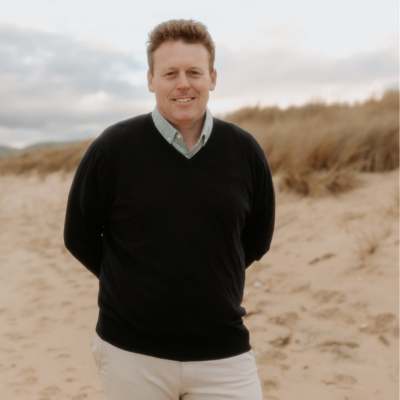
“Our parents and friends are emotionally strong for us”
In 2021 my wife Kirsten and I had just seen our third child Estelle into the world when she was diagnosed with breast cancer. Shortly after her double mastectomy, I was diagnosed with terminal brain cancer, and we didn’t know if either of us would see the kids grow up. It was a difficult stage in our lives that words cannot articulate.
The diagnosis is dynamite and then you go through the emotional low – what are we going to do?
There’s a physical low as well when you go through chemo and radiation. Once my physical health allowed me, I would go for a few gentle walks. I turned that into a bit of gardening. You start to think more about the positivity of enjoying the now.”
[On caring for his grandparents] “My grandparents were like my parents. They were both diagnosed with a terminal illness and that was my first introduction to palliative care and when I started to think about end-of-life.
I was 16 and I remember one day my nan fell over in the shower and we heard a big crash. My mum was there and my grandpa too. Grandpa was in a wheelchair at that stage because he was diagnosed with Motor Neurone Disease, and he gave me the nod to go and help her. So, I went in there, and at first, she was very reluctant. And then after a little while a wonderful thing happened. She totally embraced it and said, ‘you can help me, you’re my grandson’.
I was very close to them, and I started to live with them periodically. I’m proud that I did that because for me it was almost like thanking them one last time for all they did for me in my childhood. I probably didn’t realise the gravity of it then. I had a lot of adults at the time saying, ‘you know, you don’t have to do this’. But I wanted to. As an adult I’ve reflected on that a lot and I’m glad I did.
During those moments I realised that there was a sector (palliative care) out there. I’d never ever thought about it. I guess now it’s been shoved back in my face again. The priority and the integrity of it is important because at that time of life, that’s when we need to offer people dignity. And if nothing else, to help people just be happy.
I understand that things are on the horizon and that’s not something that is the most comfortable thing in the world.
I have MRIs every six months, blood tests and medication reviews periodically. I see my GP for a prescription renewal outside of an oncology review. The good news is that my tumour has essentially remained stable. My symptoms haven’t really changed. So that’s positive. In 2021, they gave me somewhere between 5 and 10 years to live. Three years down the track, I figure that I’m doing ok.
While I’m not in recovery, we’re just trying to keep things at bay for as long as we can. It’s great seeing and coaching the kids at soccer and enjoying all the things in life that we should. We try to make sure we enjoy these moments.
I’m going to keep plodding along. Of course it will turn, but there’s many steps on the journey and right now I’m at one that’s ok for me. It’s not always going to be ok. But I encourage others to keep talking to people and asking for help.
Our parents and friends are emotionally strong for us, so we’re lucky. There are many people we can call, and friends that we see all the time and it’s lovely. We’re certainly not alone. I don’t feel like it’s us versus the world and that’s fantastic. There’s nothing better than sometimes just sitting down with a mate and having a chat, or Kirsten being able to have a cuppa with a friend and debrief. You’ve got to be able to connect with other people.
For people who are supporting someone on a terminal illness, you don’t have to talk about it. You don’t have to say, ‘how’s your cancer?’, but if the person says something, then sure, you can talk about it. I’ve had some catch ups with friends, and we didn’t talk about it at all and that was wonderful, while other times I’ve needed to.